Ship Spotter Steve
  • Home
  • Bulk Carriers
  • Cement Carriers
  • Container Ships
  • Crude Oil Tankers
  • Cruise Ships
  • Dredgers
  • Ferries
  • Fishing Vessels
  • General Cargo Ships
  • Military & Law Enforcement
  • Off Shore Supply/Safety/Support
  • Pilot Vessels
  • Research Ships
  • Sailing Ships
  • Tankers
  • Tugs
  • Vehicle Carriers
  • Misc
  • Funnels
  • Work Boats
  • Pleasure Boats & Yachts
  • Tenders & Launches
  • Prints, Postcards & Paintings
  • Buildings, Monuments & Places
  • Yearly Statistics
  • Ship List
  • Links
  • Blog
  • Blog Index
Contact me

NEW SHIPS IN LIVERPOOL

22/5/2013

0 Comments

 
Quite a good day yesterday for new ships in Liverpool.

On arriving in the city I saw the Crude Oil Tanker NS Century (IMO 9306782, GT 57248, 2006) at the Tranmere terminal, she has since departed and is on station near Anglesey.

Leaving to go home at 530pm I took the Dock Road North, moored here were the Offhore Survey vessel Ocean Dawn (IMO 8740931, GT 104, 1969) and Chemical / Oil Products Tanker Ocean Princess I (IMO 9391517, GT 30075, 2008) which has since left Liverpool for Rotterdam.

The Seaforth end of the port was very busy and I saw three new ships here these being Bulk Carriers Theomiter (IMO 90783335, GT 17428, 1994) and Pos Aquamarin (IMO 9551674, GT 32987, 2012) together with the Cypriot  registered General Cargo Ship Szafir (IMO 9004504, GT 6030, 92). These ships are still in port apart from Pos Aquamarin which has since left and is currently on route to Antwerp.
0 Comments

WAR MEDALS

22/5/2013

1 Comment

 
Picture
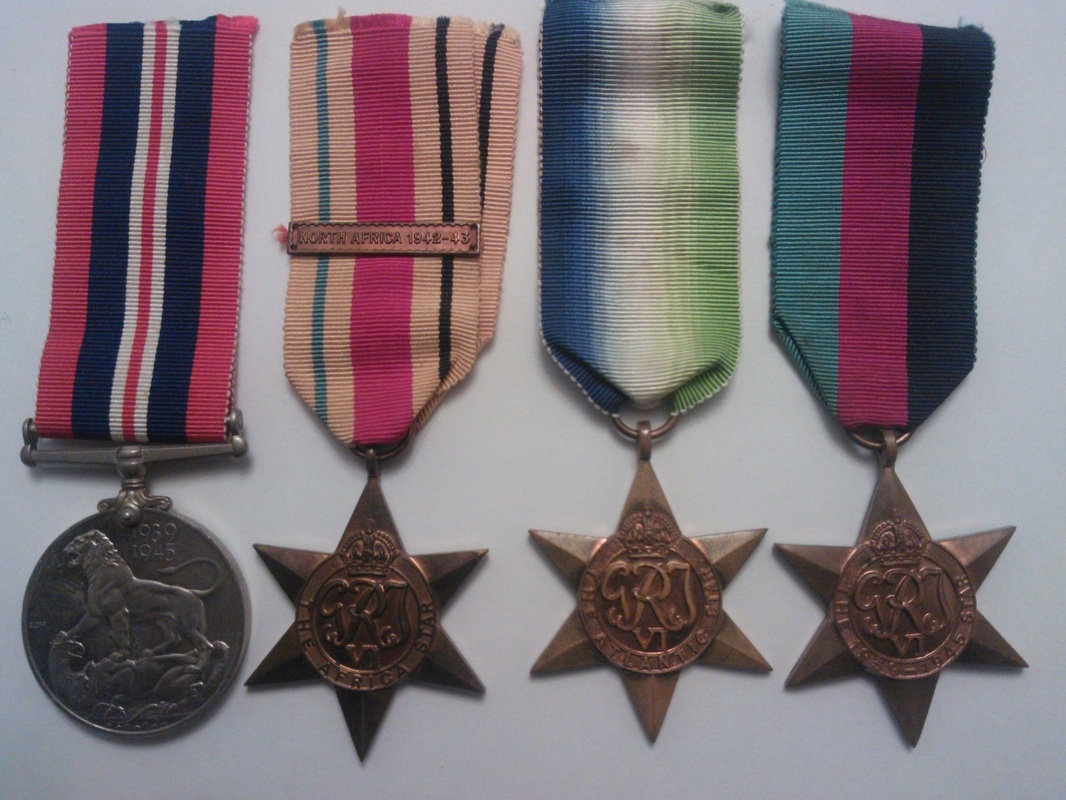
My Grandads War Medals for Merchant Navy Service in the Mediterranean and on the Atlantic and Russian Convoys - Left to right these are the British War Medal, Africa Star (With North Africa Bar) , Atlantic Star and 1939 - 1945 Star.
Picture
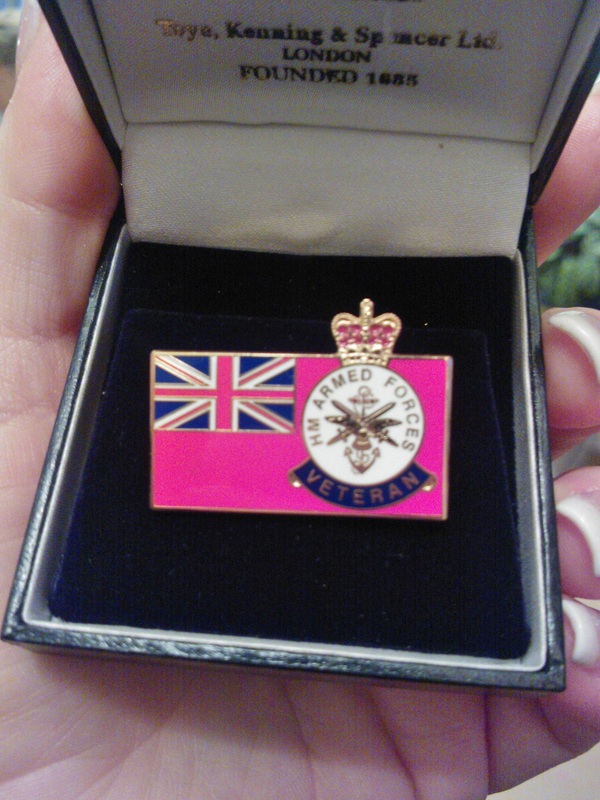
Above is the Veterans badge I recently sent off for from the Merchant Navy Association. I didnt realise that these were available to living veterans until I was chasing the use of a photographfor my site.
1 Comment

PILOT VESSEL - EDMUND GARDNER - 1953

21/5/2013

2 Comments

 
Picture
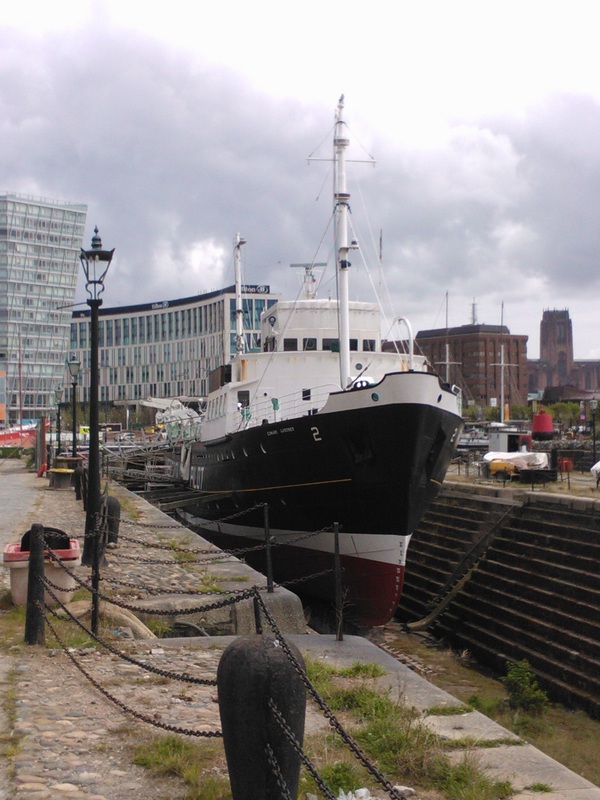
Located in Graving Dock Number 1 just North of the Albert Dock, Liverpool is the Edmund Gardner which was built in 1952/1953 by Philip & Son Ltd of Dartmouth. She operated as Pilot Boat Number 2 of a fleet of four pilot vessels introduced into service between 1937 and 1958.

The Mersey Docks and Harbour Board ordered her in July 1951 as the second of a new generation of large diesel-electric powered cutters to replace the pre-war steam cutters. She was launched 9 July 1953 and handed over 2 December 1953.  Built of riveted steel and powered by two six cylinder single acting 640bhp National diesel engines with a single screw she could make a speed of 14 knots.

She is 54.1m long, with a beam of 9.6m, draft of 4.4m and 701 GRT.

Total build cost including a number of extra items was approximatly £211,000.  Most if not all of the vessels were designed by Graham & Woolnough of Liverpool and named after the Chairmen of the Board i.e. Sir Thomas Brocklebank, Edmund Gardner, Arnet Robinson and William M Clarke. Their role was to provide a pilot service to guide the steady stream of ships entering and leaving the Mersey and as such they could accommodate up to 32 pilots and 11 apprentice pilots together with a regular crew.

Approaching the Port of Liverpool due to sand banks, shifting sands and strong
tides has since always been a hazardous undertaking. In 1689 the first official
chart of the Mersey was produced with a later version appearing in 1738. 

Although charts made navigation easier, it was still precarious and local 
fishermen often acted as unofficial pilots / guides for vessels.The first official Liverpool Pilot Service was established by the Liverpool Pilotage Act of 1766 and resulted in the compulsory presence of a pilot aboard all vessels in the Mersey. The 19th century witnessed the significant development of Liverpool as  an international port and the pilots provided an essential service for ships both entering and leaving port as well as manoeuvring into and out of the docks.

The cutters worked on a rota of one week on station at the Mersey bar, one week on station off Point Lynas and one week serving as supply boat and tender to the boats on station. Edmund Gardner carried out these duties until 1981 when the two remaining large cutters were withdrawn from service and replaced by smaller high speed launches.

She was bought in 1982 by the Merseyside Maritime Museum and maintained afloat in Princes Dock, Liverpool being moved to her current location in Canning Graving Dock Number 1 in 1984. 
2 Comments

Pelican OF LONDON - 1948

20/5/2013

0 Comments

 
Picture
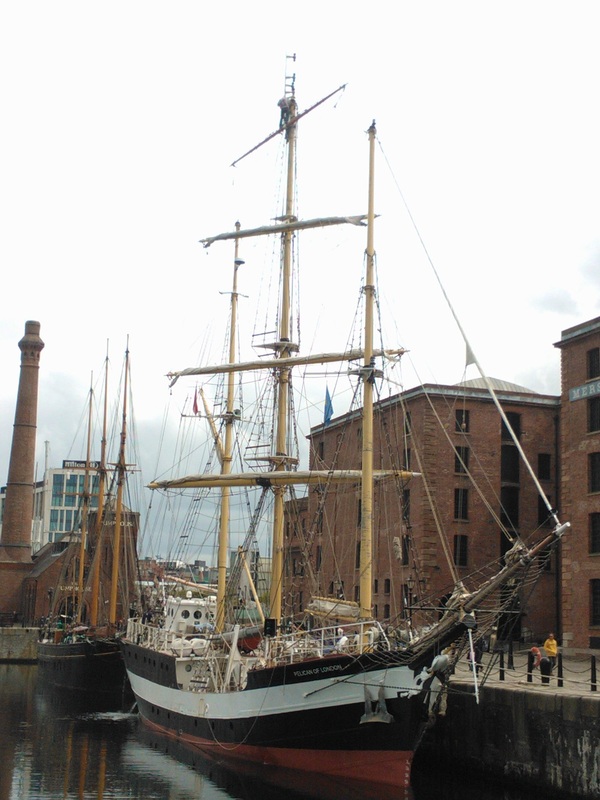
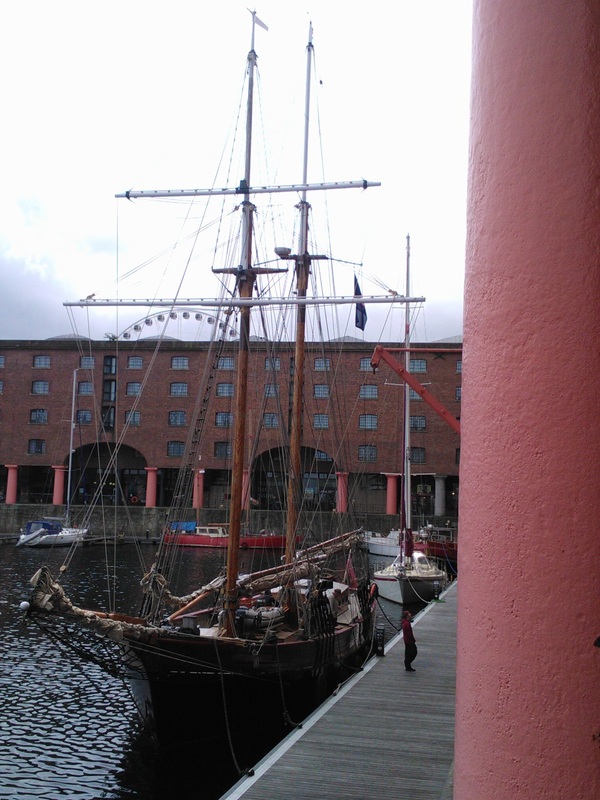
One of five identical ships built by Chantiers et Ateliers, Lyon, France in 1948 Pelican was originally a double-beam Arctic fishing trawler.

In 1968 she was reclassified from a trawler to a coaster and renamed Kadett
remaining as Kadett until 1995 when she again changed hands when s
he was bought by ex-Naval Commander Graham Neilson who transformed her into a tall ship. 

She is constructed of steel (below the main deck 10mm thick and above the main deck and bulwarks 6mm thick) has a length of 45.0m, beam of 7.03m and 2.95m daught with a GT 226.

She is currently operated as a sail training vessel.

Seen and photographed next to the Albert Dock Liverpool, 14 May 2013.

0 Comments

Light Vessel (LV 23) Planet

18/5/2013

0 Comments

 
Picture
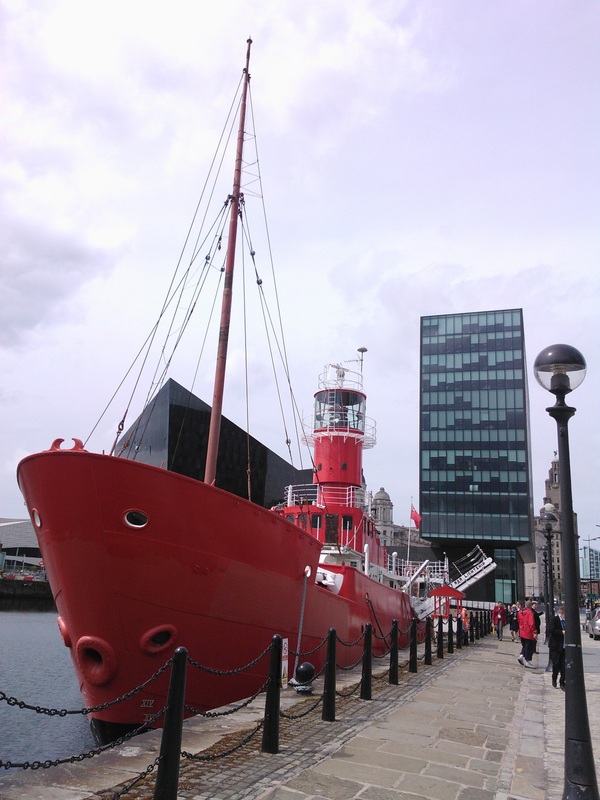
Light vessel 23 named Planet is berthed in Canning Dock adjacent the Albert Dock in LIverpool  and is now being used as a bar and function facility.

She was built in 1959 for £171,541 by Philip & Son, Dartmouth, Devon, England (Yard No. 1312) having a length of just over 38m, beam of 8.12m and draft of 4.99m.

Ordered in September 1958 by Mersey Docks & Harbour Board she was launched on 9 September 1960 and from 1960 to 1972 was used on BAR Station.

On 4 September 1972 she was sold to Trinity House London and became No.23 in their fleet. Working at Kentish Knock until 1975 she was the last light vessel to be withdrawn from this station.

From 1975 to 1979 she was on Varne Station and from 1979 to 1989 worked the Channel Station.

In 1991 she was sold to Pounds Marine Services and towed to Portsmouth.
  
In 1992 she was sold again and brought to Cammell Laird´s Wet Basin and later to  Birkenhead. Since 1992 she has been sold numerous times and is now a floating bar.
0 Comments

JohannA Lucretia - 1945

17/5/2013

0 Comments

 
Picture
Another tall ship seen in LIverpool on Tuesday was the Johanna Lucretia.

She is a two masted schooner built at the Rhoos Shipyard, Ghent, Belgium in 1945. 

Built from Oak with an Iroko deck and Douglas fir masts she measures 96ft (28.65m) in length with a beam of 18 ft (5.50m) and draught of 8 ft (2.45m). She has a total sail area of 380 m2 and NT of 50.75

Although originally built as a fishing vessel she was converted for recreational use in 1954. She sailed in Dutch waters from her home port in Enkhuizen until 1989 when she was sold and transferred to a new base in Plymouth.

During 1992 she was refitted at the Tommy Nielson Yard in Gloucester and used for charter sailing to Caribbean, European and US ports.

After languishing in Gloucester docks for some time she was restored between 2008 and 2010.


0 Comments

De WADDEN - 1917

16/5/2013

0 Comments

 
Picture
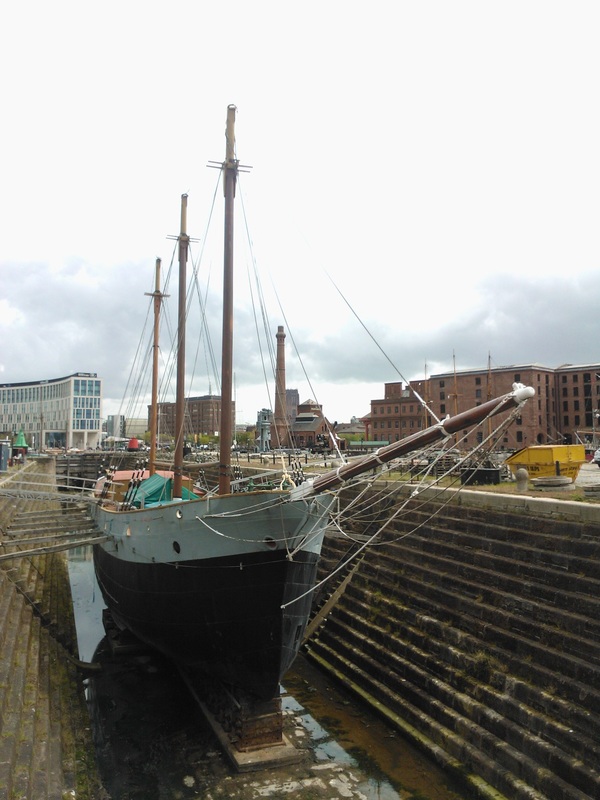
Seen on Tuesday sitting in the Liverpool's Graving Dock De Wadden is a three-masted auxiliary schooner built in 1917 by Gehr Van Diepen of Waterhuizen in the Netherlands. Ordered by the Netherland Steamship Company with two sister ships she was built to take advantage of  lucrative trading conditions created by Dutch neutrality in the First  World War. 

During the world-wide shipping slump in the early 1920s she was sold to Richard Hall of Arklow in Ireland and between 1922 and 1961 she carried a multitude of different cargos between Liverpool and Irish Ports.

During World War Two she was one of a small handful of vessels which provided supplies to the Irish Republic after many other ships had been taken up for the British war effort. Her crew consisted of only five men and a boy, and since she could sail, a qualified marine engineer was not required. She carried a motor winch in the forward deckhouse to allow the cargo to be handled in ports with very limited facilities. 

Her original 125 hp 'SteyWal Dutch engine gave her a speed of  five knots, but after a major failure was replaced by an 80hp Bolinder engine  purchased from the Admiralty. In addition a 50 hp Kelvin engine was fitted on the port quarter to give additional power. These were both removed in January 1942 and replaced with a six cylinder 150 hp Crossley DR diesel which was only replaced by a modern engine in 1980.
0 Comments

ANCHOR - HMS NILE - 1839

16/5/2013

1 Comment

 
Picture
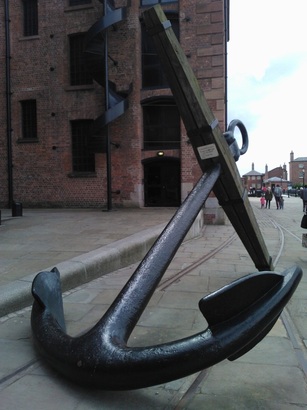
I had a wander around the Albert Dock in Liverpool on Tuesday and located near Canning Dock is the admiralty pattern anchor of HMS Conway. 

She was laid down in Oct 1826 at HM Dockyard Plymouth as HMS Nile a 92 gun two deck second rate ship of the line having an overall length of 205 feet, depth of 54 feet, and weight of 4,375 tons.

She was armed with ten 8 inch guns and eighty two 30 pounders and was built entirely of wood, her construction costs being £86,197. Her sister ships were HMS London & HMS Rodney and her full complement of men was 850.

She was launched on 28 June 1839 in front of a large crowd of approximatly 50,000 people by Miss Warren the daughter of the Dockyard Admiral.

From 1839 to 1854 she was held in Reserve at Devonport and during this period a 500hp engine with a single screw was added, on the completion of this work she was finally commissioned.

In 1854 she was commanded by Commodore Henry Byam Martin, Western (Channel) squadron and sailed in May 1854 to the Gulf of Finland to join the Baltic Squadron. As the war with Russia progressed In May 1855 she led the squadron into Biorko Sound engaging the Russians on several occasions. At the end of hostilities in April 1856 she formed part of the Spithead Review to mark the end of the Crimean War. 

On 17 June 1856 she sailed for Halifax, Nova Scotia to patrol the North American and West Indies stations. For some time she was the flagship of Rear Admiral Arthur Flagshawe and visited Halifax, Bermuda, San Domingo, Port Royal and Havana. 
 
In  May 1859 she was back in Britain and spent seven weeks in Greenock as a show ship open to visitors. On 3 July 1859 she arrived on the River Mersey for a similar visit.


On 24 August 1859 Nile steamed out of Cork harbour to join the Channel squadron at Spithead and exercised with the fleet the following month. On 15 October 1859 she sailed into the Atlantic for the West Indies but was caught in a  hurricane in the North Atlantic suffering severe damage forcing a return to Cork for repairs, in December she was towed to Plymouth where the repairs were completed.

Nile become flagship of Rear-Admiral Alexander Milne sailing for Bermuda in June 1860 arriving in Halifax as flagship of the North American Squadron, later the same year the Prince Of Wales was entertained on board.

She was reported as being in Bermuda in February 1862 commanded by Captain Barnard with other vessels engaged in recovering the stores from the HMS Conqueror which had been wrecked on Rum Cay. 

HMS Conqueror was 101-gun man of war built in Devon in 1855. Like HMS Nile she served in the Crimean war but was lost on Sumner Point Reef, Rum Cay, on 13 December 1861. She was 20 nm out in estimating her position and after making her landfall  cut the South East point of Rum Cay too fine and went hard on the reef. The crew unloaded everything they could salvage and made a camp on the island where they were marooned until rescued once news of the disaster became known.

April 1864 found her back in Britain and placed in Reserve at Devonport. In 1876 the Admiralty carried out many renovations to the ship and fitted a new foremast (the old main mast of HMS Satellite), main mast, mizzen mast and bowsprit from HMS Jason. In July 1876 she was renamed HMS Conway and moved to Liverpool where she became a school replacing an earlier vessel of the same name. 

Relocated due to bombing during the war she was being moved in 1953 when she ran aground on rocks beneath the Menai suspension bridge in North Wales breaking her back as the tide fell, later she burned to the waterline whilst being dismantled. Apparently her remains can still be seen at low tide.
1 Comment

LIverpool - NEW SHIPS

13/5/2013

0 Comments

 
On Thursday I was in Liverpool and lucky enough to have time in the morning to get to the River parking near the Arena.

From the riverside here I saw three new ships, the Crude Oil Tanker Eagle Sappora (IMO 9387255, GT 59671, 2008) was at Tranmere, General Cargo Ship Flex Keston (IMO 9259068, GT 3164, 2003) was at Bromborough being prepared to sail to Belfast and looking North I could see the Bulk Carrier Santa Elena (IMO 9329837, GT31247, 2005) swinging around to gain entry to the dock locks.

These ships have now been added to my ship list.

I drove past Trafford Wharf today but everything was quiet, the scrap yard berth was also empty Arklow Fortune having left over the weekend bound for Bilbao.  

 
0 Comments

MISSING SHIPS - PHOTOGRAPHS REQUIRED!

10/5/2013

10 Comments

 
I am currently trying to get (with permission) pictures of the following ships to complete the record of my Grandads career at sea.

SS Janeta ID 161384 GRT5312
Tower Ensign ID 14?463 GT 3525
SS Trelissick (St.Ives)ID 142567 NRT 3190
MS Hopecrown (Newcastle)ID 161607 NRT 3131
Stuart Prince ID 168022
Manchester Trader ID 166551
SS Kerma (London) ID 160568 RT 2698
SS Defender (Liverpool) ID 137459 NT 5010
MS Clydefield (Newcastle) ID 149473 GT 7365
SS Manchester Division(Manchester) ID 135369
William Homan (London) ID 168491 NT 994
MV Biscoe ID 183120 GRT 9312
MV Trevaylor (London) ID 157400 GT 5256
Manchester Regiment ID 169069 NT 5363
SS Salford City ID 147423 GT 1179
SS Caslon (London) ID 183030 NRT 3018
SS Manchester Progress ID 147432 GT 4340
Manchester Merchant ID 182613
MV Glen ID 161584

The above is not as easy as anyone reading this might think! - That is if anyone actually does read this!

I have sent numerous emails around the world but apart from kind assistance from the Merchant Navy Association nothing as yet.

For older ships I recommend the seatheships website (I was passed a link to it  by a shipspotting member) - I'm trying to join at the minute but their system for some reason does not like my email so I have had to apply 'manually'. Plenty of excellent pictures of ships that I have not seen anywhere else.


10 Comments
<<Previous
Forward>>

    Author

    My interest in ships and the sea started back in 2006 when I worked for a couple of years  on the banks of the River Mersey. I have since been on a couple of cruises around the Med and in the Far East and have started to take more interest in researching and photographing some of the ships and other vessels seen on my travels.

    Archives

    February 2019
    January 2019
    December 2018
    November 2018
    October 2018
    May 2018
    April 2018
    December 2017
    October 2017
    September 2017
    August 2017
    June 2017
    May 2017
    April 2017
    March 2017
    February 2017
    January 2017
    December 2016
    November 2016
    October 2016
    September 2016
    August 2016
    July 2016
    June 2016
    May 2016
    April 2016
    March 2016
    February 2016
    January 2016
    December 2015
    November 2015
    October 2015
    September 2015
    August 2015
    July 2015
    June 2015
    May 2015
    April 2015
    March 2015
    February 2015
    January 2015
    December 2014
    November 2014
    October 2014
    September 2014
    August 2014
    July 2014
    June 2014
    May 2014
    April 2014
    March 2014
    February 2014
    January 2014
    December 2013
    November 2013
    October 2013
    September 2013
    August 2013
    July 2013
    June 2013
    May 2013
    April 2013
    March 2013

    Categories

    All

    RSS Feed

Powered by Create your own unique website with customizable templates.